


Product highlights

Max. Power

Voltage

Max. Current

Weight
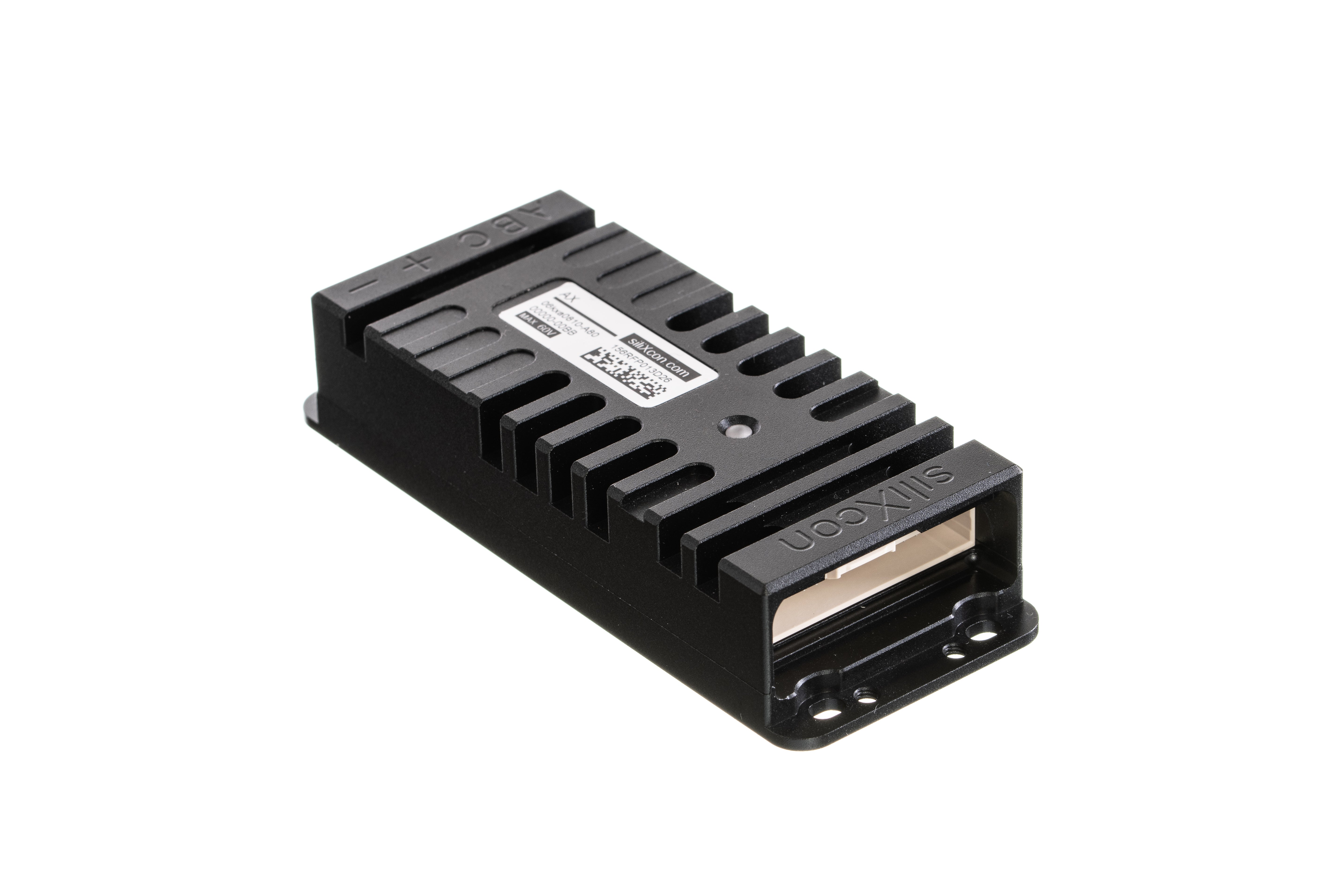
Controller AX Series
The AX Series 3 kW controller offers FOC precision, advanced firmware, and easy integration — perfect for small UAVs, robotics, and portable electric systems.
Product highlights
Max. Power
Voltage
Max. Current
Weight
Pairs well with
Verified EU-made.
Cyber security built into every component.
Remote troubleshooting & configuration help
Controller AX Series
Product details
⚡ Lightweight Precision for Small Drives
The AX Series provides up to 3 kW of continuous power in an ultra-compact body. Using true Field-Oriented Control (FOC), it delivers smooth torque and superior efficiency for small UAVs, robotics, and compact electric applications.
🧠 Smart Firmware, Simple Setup
Equipped with Silixcon’s intelligent firmware, the AX controller allows quick and intuitive setup while maintaining precise motor control. It’s engineered for developers who need plug-and-play integration with professional-grade results.
🛠️ Small Size, Strong Core
Made from quality materials and designed with effective cooling, the AX controller combines low weight with exceptional durability and long lifespan.
Basic parameters
Max. peak current (Arms)
Max. continuous current (Arms)
Rated DC Voltage (V)
Mechanical parameters
Dimensions
Weight (kg)
Casing
Power density
Sensors compatibility
Motor temp., Hall sensors, Sin-Cos encoder, A/B encoder, SSI/BiSS, Resolver
Communication
Multiple analog inputs, CAN, UART, USB
Communication
Documentation
Download Kos60 Specification Sheet
If you have any questions, you are always welcome to contact us. We'll get back to you as soon as possible, within 24 hours on weekdays.
-
Shipping Information
Use this text to answer questions in as much detail as possible for your customers.
-
Customer Support
Use this text to answer questions in as much detail as possible for your customers.
-
FAQ’s
Use this text to answer questions in as much detail as possible for your customers.
-
Contact Us
Use this text to answer questions in as much detail as possible for your customers.
FAQs
Please read our FAQs page to find out more.
What does an ESC do?
The ESC (Electronic Speed Controller) is the brain of the electric propulsion system. It regulates the current sent to the motor phases to achieve the required speed and torque. It also includes key protection features such as overcurrent, undervoltage, and overtemperature safeguards to prevent damage to the motor and power electronics.
How is the ESC controlled?
The ESC can be controlled by a flight controller, an autopilot, or directly by a transmitter or throttle signal. The most common control interfaces are PWM, CAN, and UART. PWM is simple and widely supported, while CAN and UART enable two-way communication for telemetry, configuration, and advanced diagnostics.
What happens if the ESC overheats?
Most ESCs monitor temperature via internal sensors. If protection is enabled, the ESC will reduce power or shut down. Without thermal protection, overheating can damage MOSFETs or capacitors and permanently destroy the controller.
How to prevent ESC overheating?
Provide adequate airflow or liquid cooling, depending on the ESC design. Avoid overloading the motor, since excessive current directly increases ESC temperature. Ensure correct propeller size or load and verify that wiring and connectors can handle the rated current.
What maintenance does an ESC require?
ESCs are maintenance-free. Keep them clean and dry. Use compressed air to remove dust, and check connectors periodically for corrosion or loose pins. Always make sure the ESC firmware is up to date.