


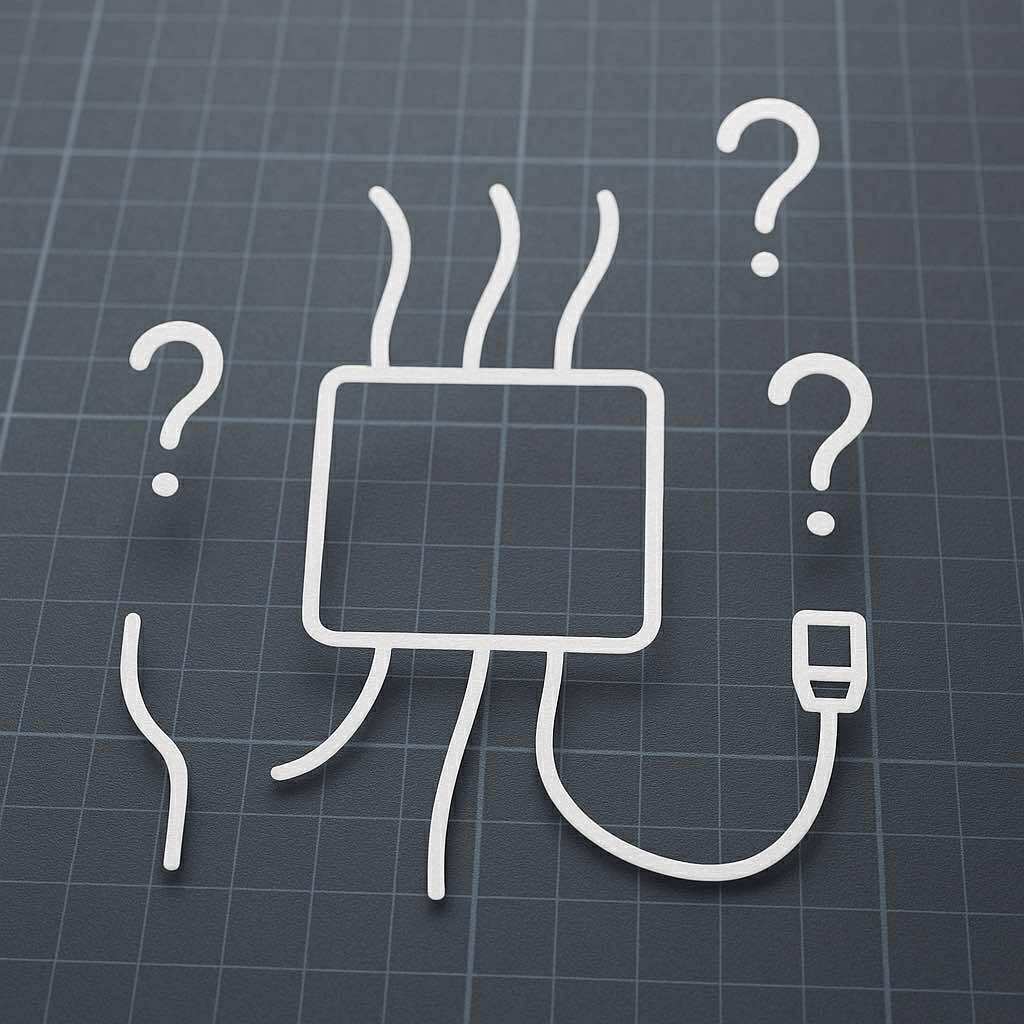
What an ESC Actually Is
An ESC, or Electronic Speed Controller, is the device that manages how much power flows from your battery to your electric motor. In simple terms, it is the brain between your power source and your propulsion. The ESC controls the rotation speed, direction, and dynamic response of the motor, turning electrical energy into controlled mechanical motion.
The first ESCs appeared in the 1980s alongside the early generation of RC models. At that time, most designs used simple analog circuits and brushed DC motors. As brushless motors became dominant, ESCs evolved rapidly, introducing microcontrollers and digital signal processing. Modern ESCs are now complex control units capable of managing high voltages, regenerative braking, telemetry, and advanced communication protocols.
Current Technologies and Control Principles
Today’s ESCs are built using advanced semiconductor technologies that define their efficiency, size, and power capabilities. The most common switching elements are MOSFETs (metal oxide semiconductor field effect transistors), which are fast, efficient, and reliable. For high performance or high voltage applications, SiC (Silicon Carbide) and IGBT (Insulated Gate Bipolar Transistor) modules are used, offering superior thermal performance and current handling, typically in UAVs, eVTOLs, and heavy duty robotics.
When it comes to motor control, there are two main methods:
-
Six step (trapezoidal) control – simpler, cost effective, and widely used in hobby and mid range industrial ESCs
-
Vector control (FOC – Field Oriented) control – more complex but provides smoother torque, higher efficiency, and precise control at all speeds. It is the standard for professional UAVs, EVs, and industrial drives.
Many ESCs now integrate CAN, UART, or PWM interfaces for configuration and telemetry, allowing real-time monitoring of temperature, current, RPM, and voltage
Motor and Sensor Compatibility
ESCs are designed to drive BLDC (Brushless DC) or PMSM (Permanent Magnet Synchronous Motors). Some controllers can handle both types through software settings. The compatibility with sensors depends on the control strategy — sensorless ESCs rely on back EMF detection, while sensored ESCs use feedback devices such as:
-
Hall sensors – common and reliable for low speed startup
-
Sin/Cos encoders – provide precise angular feedback for smooth vector control
-
SSI or BiSS encoders – used in professional applications requiring high resolution and robustness
-
Temperature sensors – often integrated to protect the system against thermal overload
How to Choose the Right ESC
Selecting the right ESC depends on the overall power system design, especially on your motor and battery. The key parameters to consider are:
-
Voltage rating
The maximum battery voltage must never exceed the rated voltage of the ESC. Exceeding this limit can permanently damage the controller or cause failure under load. -
Current rating
The ESC must handle the continuous current draw of the motor plus short term peaks during acceleration. -
Continuous current is the current the ESC can safely handle for an extended period without overheating.
-
Peak current refers to short bursts, usually lasting a few seconds, which the ESC can handle temporarily.
-
eRPM limit
The ESC has a maximum electrical RPM (eRPM), which represents how many electrical cycles per minute it can process. The motor’s maximum speed must stay within this eRPM limit. If the motor exceeds it, the controller may lose synchronization or shut down. -
Cooling and installation
Air cooled ESCs are fine for lightweight drones, while liquid cooled variants are used in high power systems or enclosed environments. -
Communication interface
Choose based on your setup — CAN for UAVs with autopilots, PWM for traditional RC systems, or UART for integration with onboard computers. -
Sensor compatibility
Make sure the ESC supports your motor’s feedback type, especially if you are using encoders or advanced FOC control.
In Summary
An ESC is much more than just a throttle controller. It is a key component that defines how efficiently and safely your propulsion system runs. Understanding its principles helps you avoid mismatched components, overheating, or unstable flight behavior. When in doubt, test and verify the setup under real load conditions — and rely on verified and supported European-made ESCs that guarantee performance, serviceability, and long-term support.
Need Help Choosing?
If you are not sure which ESC fits your setup, reach out to our technical team. We will help you select, configure, and verify the right controller for your motor and application.
Write to strava@componentas.eu and let’s build your next system together.

Share:
Building Europe’s Self-Reliant Supply Chain
What is a BLDC Motor and How to Choose the Right One